Antique Silver Boxes
Antique and vintage silver boxes: Victorian card cases, silver gilt compacts, Chinese export boxes with dragons and flowers in relief, colonial Vietnamese silver gilt and German 800 silver caskets.
5.0 by our buyers on Google · 4,000+ customers
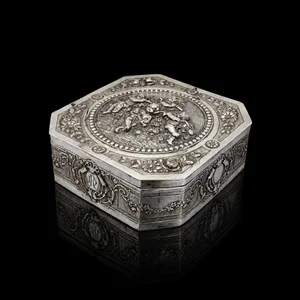
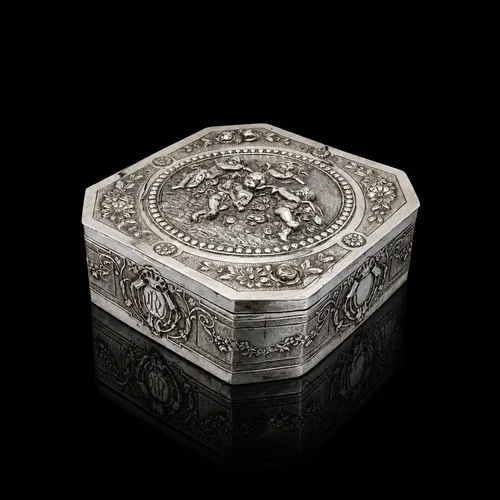
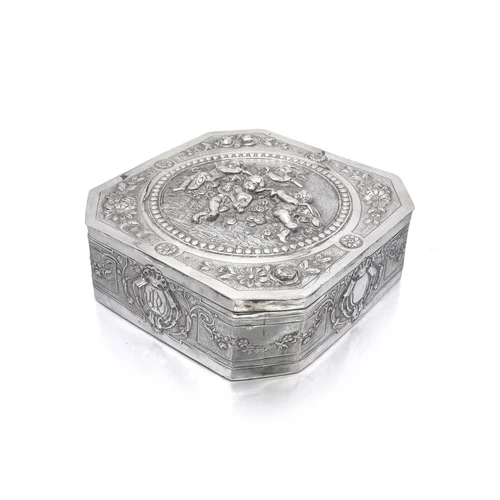 Antique German Hanau .800 Silver Casket, Repoussé Putti, Gilt Interior, Dated 1924£2,450
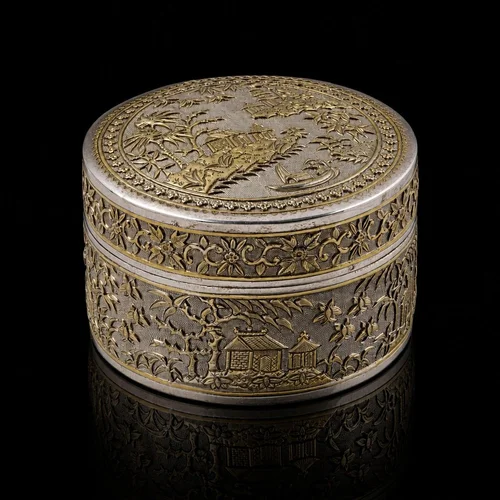
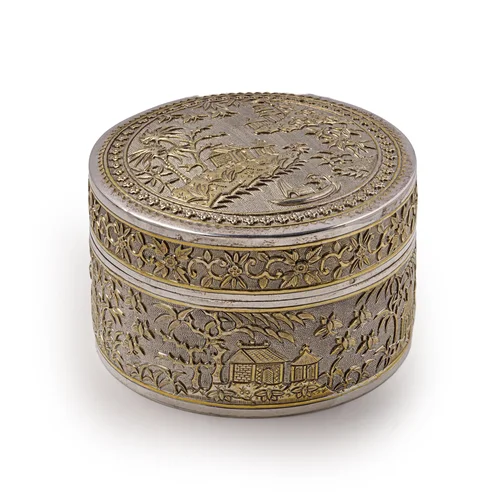 Vietnamese Colonial Silver-Gilt Round Box VINH-SADEC£850
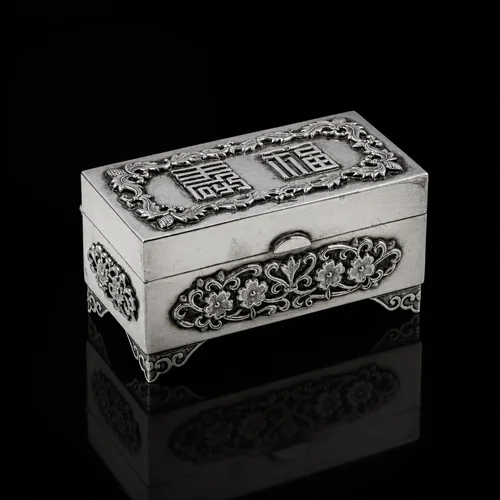
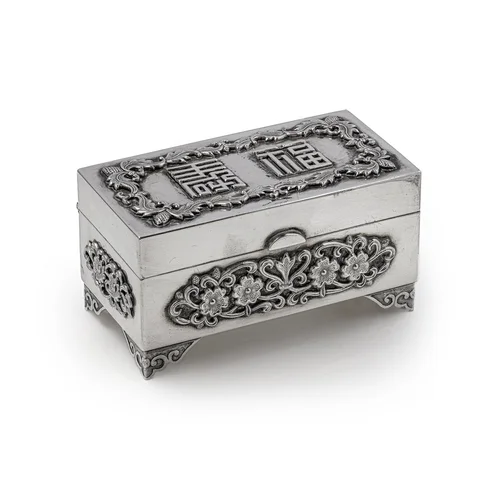 Chinese Silver Box with Floral Relief, Early to Mid 20th Century£850
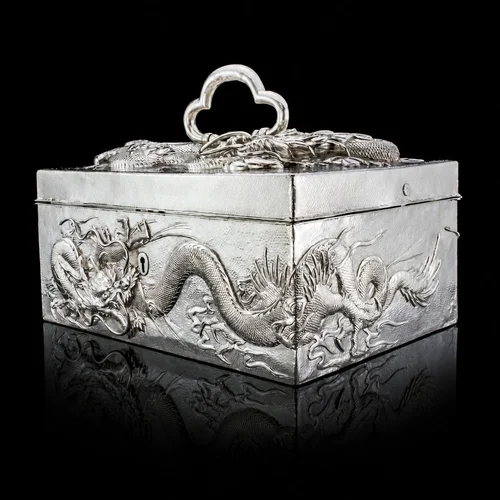
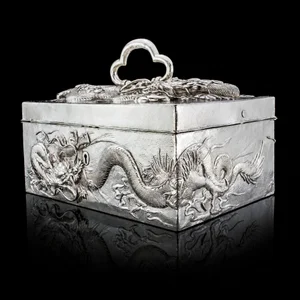
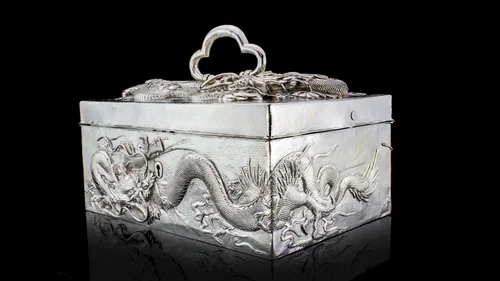 Antique Chinese Export Solid Silver Dragon Box, 1880 -1920£18,750
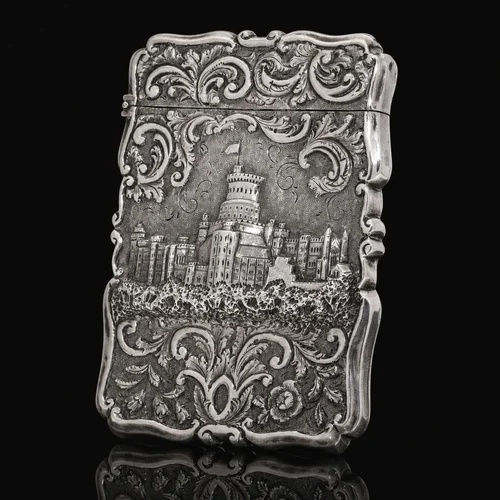
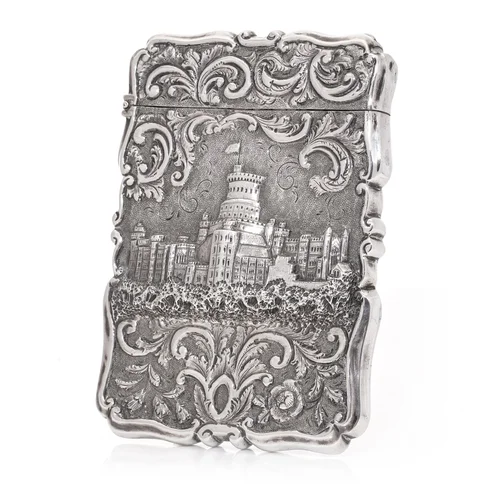 Victorian sterling silver embossed card case, by Edward Thomason, featuring Windsor castle, 1851£1,980
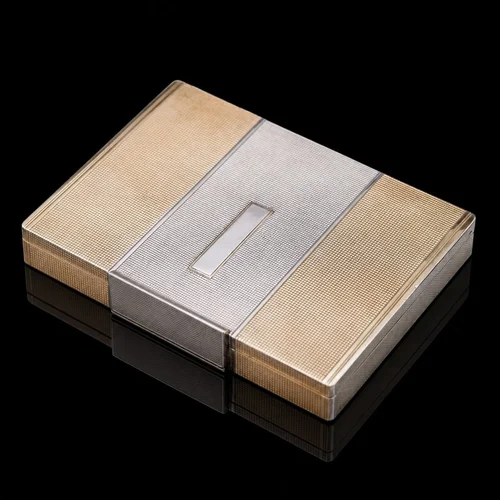
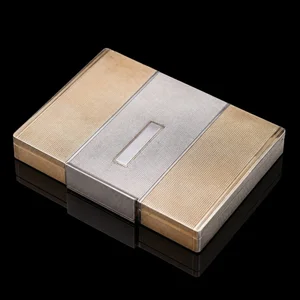
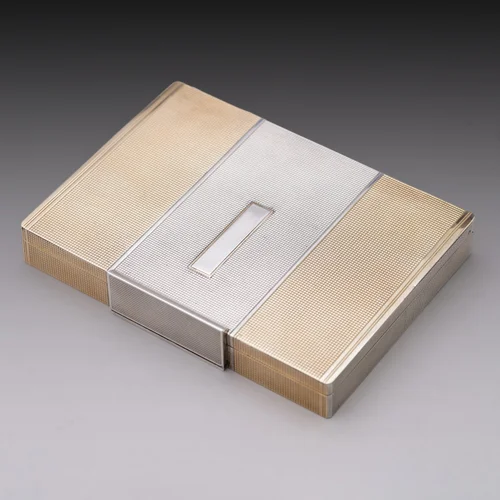 A vintage silver-gilt compact case by Asprey, London, 1939£2,500
Recently sold
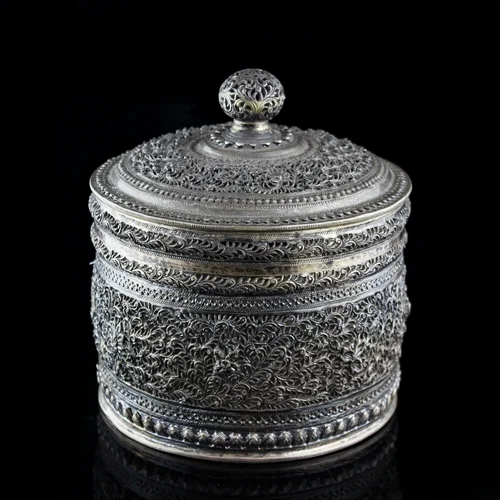 Antique Thai silver unusual betel boxSold
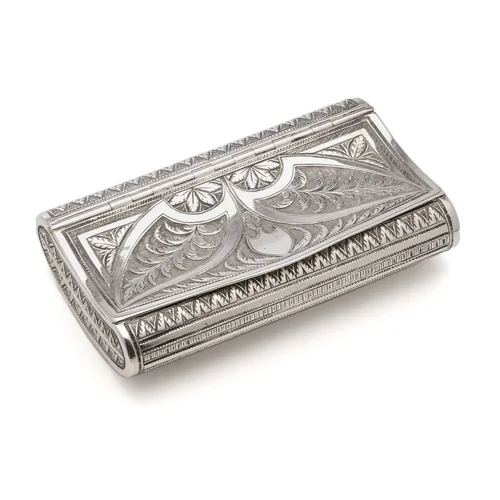 Antique Austrian sterling silver snuff box with floral motifsSold
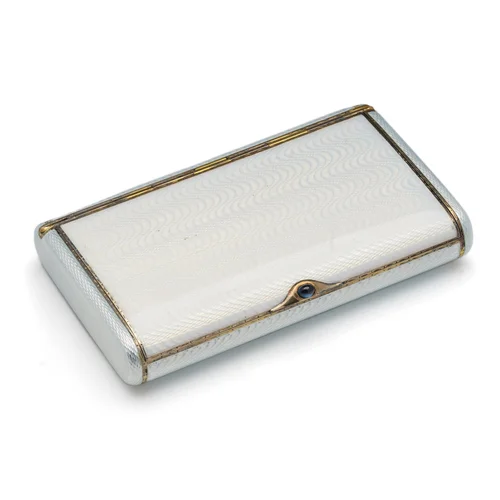 Russian silver gilt and guilloche enamel cigarette case, c. 1910 St. Petersburg by Andrey AdlerSold
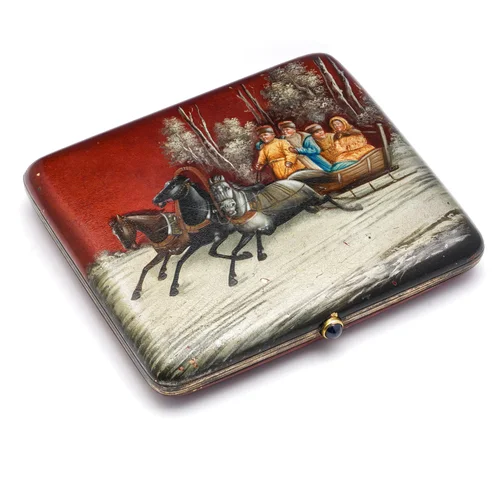 Antique Russian Silver Gilt and Lacquer Cigarette CaseSold
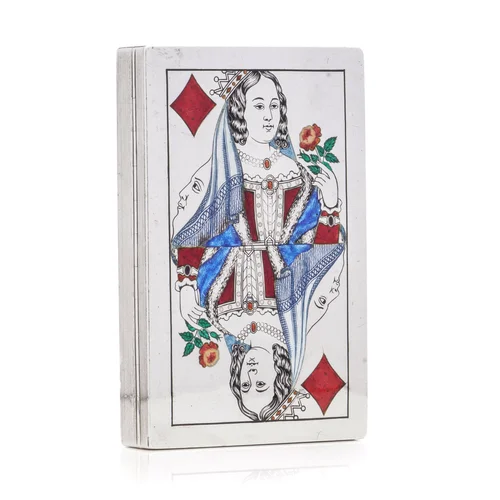 Russian silver and champlevé enamel snuff box, Moscow 1869Sold
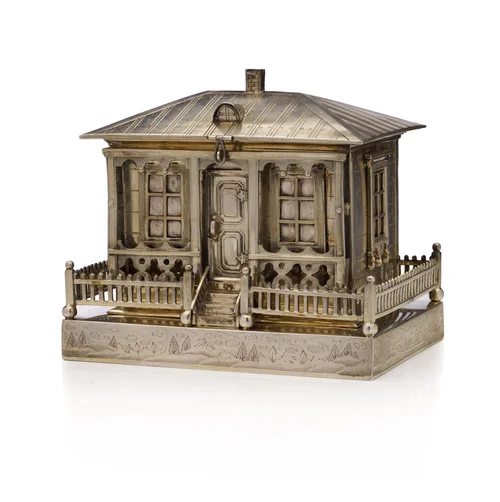 Antique Russian Silver trompe loeil box, Moscow, 1869Sold
Small boxes for every purpose
Silver boxes were made for snuff, pills, vinaigrettes, stamps, matches, visiting cards and powder. Snuff boxes were the great 18th-century form; vinaigrettes held a sponge soaked in aromatic vinegar under a pierced grille; card cases carried visiting cards in the 19th century. Compacts held powder and a mirror and are mostly 20th century.
The Birmingham box makers
Birmingham was the centre of the British small silver trade, known as the "toy" trade. Makers such as Nathaniel Mills, Joseph Willmore and Edward Smith produced snuff boxes, vinaigrettes and card cases, and the castle-top card case, embossed with a view of a building, is a Victorian Birmingham speciality.
Chinese export silver
From the late 19th century, workshops in Canton, Shanghai and Hong Kong made silver boxes, often decorated with dragons, bamboo and flowers in deep relief, for Western buyers. They usually carry the maker's mark in Chinese and Latin letters and sometimes a pseudo-hallmark, and the standard can be lower than sterling.
Caskets and continental boxes
Larger caskets and jewel boxes come from Germany, the Netherlands and France. Hanau makers produced repoussé caskets with putti and scenes in older styles, often gilded inside and marked 800.
What to check
Open and close the lid: it should sit flush and the hinge should be straight with no splits. Look at the corners and base for dents and old repairs. Check that interior gilding is intact and that the hallmarks on the lid and base match, which shows both parts are original.
Gilt interiors
Many small silver boxes are gilded inside. Gold resists the staining caused by snuff, aromatic vinegar and cosmetics, so a vinaigrette, snuff box or compact usually has a gilt interior. Original gilding with gentle wear is a good sign that a box has not been over-cleaned.
Engraving and initials
Lids often carry engraved initials, crests or dedications. These are part of a box's history, but if they have been removed the lid will look thinner or slightly dished in that area.
Questions
How can you tell if a box is real silver?
Look for a hallmark or a 925, sterling or 800 stamp, usually inside the lid or on the base. British silver boxes are often marked on both the base and the lid. EPNS or EP means silver plate.
What is a vinaigrette?
A vinaigrette is a small silver box with a hinged, pierced inner grille, made from the late 18th century. It held a sponge soaked in aromatic vinegar, which was sniffed to mask unpleasant smells. The inside is usually gilded to resist the vinegar.
What is a card case?
A card case is a slim silver box, often engraved or embossed, made to carry visiting cards. They were popular in Victorian Britain, and those embossed with views of famous buildings are called castle-top card cases.
How do you clean a silver box?
Wipe with a silver cloth and avoid dips, which can creep into hinges and damage gilt interiors. Do not soak boxes with wooden, tortoiseshell or enamel parts. Store them closed in a dry place.