How to Value Antique Jewellery: 7 Key Factors
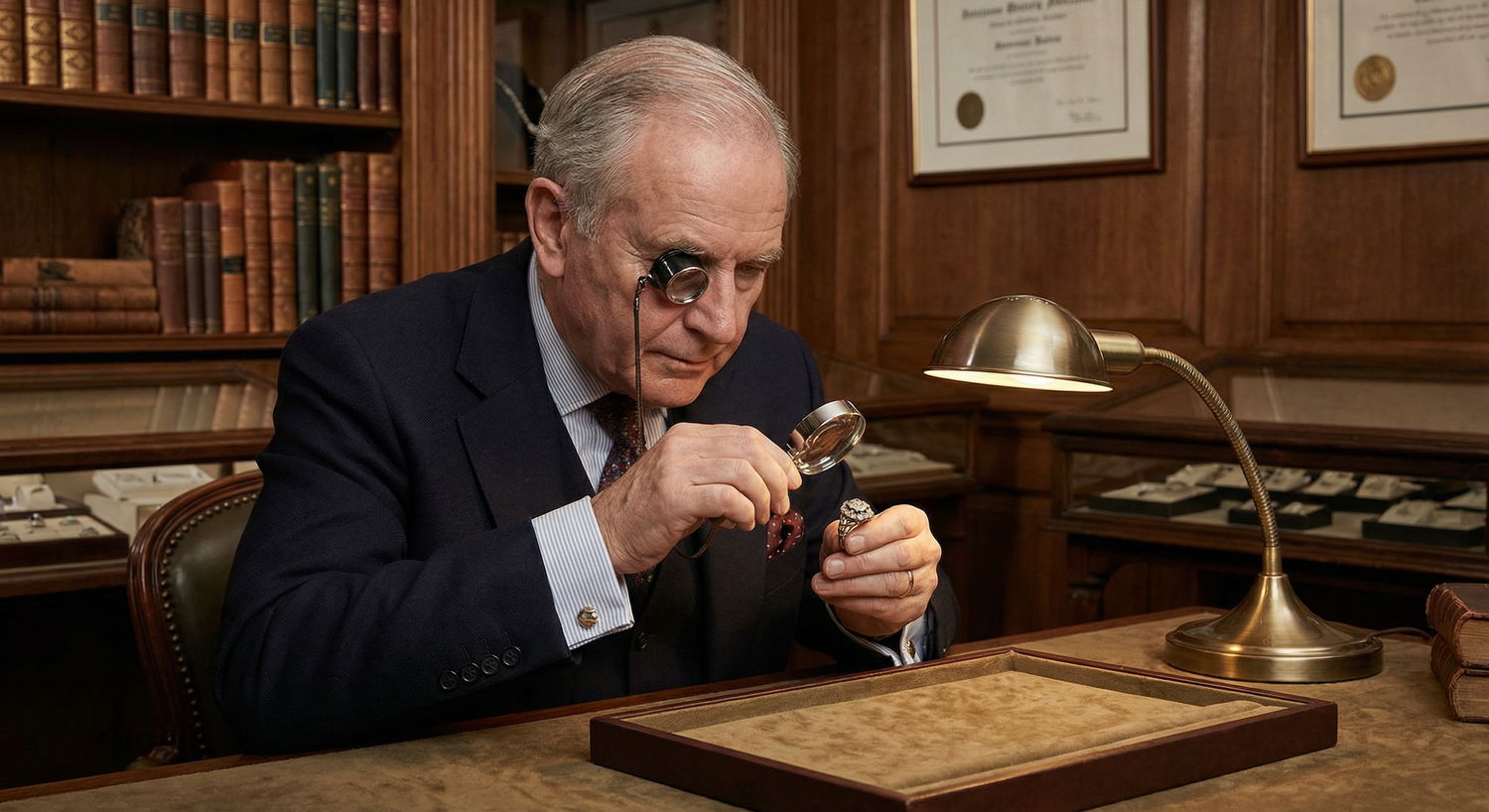
How to Value Antique Jewellery: 7 Key Factors That Determine Worth
Quick Answer
Antique jewellery value depends on seven key factors: hallmarks and purity (9ct, 18ct, sterling silver), gemstone quality (carat, cut, colour, clarity), era and age (Georgian, Victorian, Art Deco command premiums), brand and maker (Cartier, Tiffany, Van Cleef), condition (original vs repaired), weight, and provenance. Designer pieces from prestigious makers typically hold 30-70% above melt value, while rare Georgian and Victorian pieces can command multiples of intrinsic metal worth.
Key Takeaways
- Hallmarks are the fastest way to establish authenticity — look for UK assay office stamps (lion passant, anchor, leopard's head)
- Georgian (pre-1837) and Art Deco (1920-1939) pieces command the highest premiums due to rarity and collector demand
- Designer jewellery from Cartier, Van Cleef & Arpels, Tiffany, and other luxury houses retains 40-70% of retail value on the secondary market
- Natural gemstones (especially untreated rubies, sapphires, and emeralds) dramatically increase value compared to synthetic or treated stones
- Original condition with no repairs or replaced stones is worth significantly more than restored pieces
- Provenance (documented history, original boxes, receipts) can add 20-50% to an item's value
- Scrap gold value is the baseline — anything above this reflects craftsmanship, rarity, and historical significance
Table of Contents
Whether you've inherited a jewellery box from a relative, discovered pieces at an estate sale, or simply want to understand what your existing collection is worth, determining the value of antique and vintage jewellery requires knowledge of several interconnected factors. Unlike modern mass-produced jewellery, antique pieces carry historical significance, craftsmanship premiums, and rarity that can push values far beyond their melt-down metal worth.
This guide covers the seven essential factors that professional valuers examine when assessing antique jewellery — from hallmarks and purity to provenance and condition. By the end, you'll understand how to identify valuable pieces in your collection and when it's worth seeking a professional valuation or considering selling your jewellery.
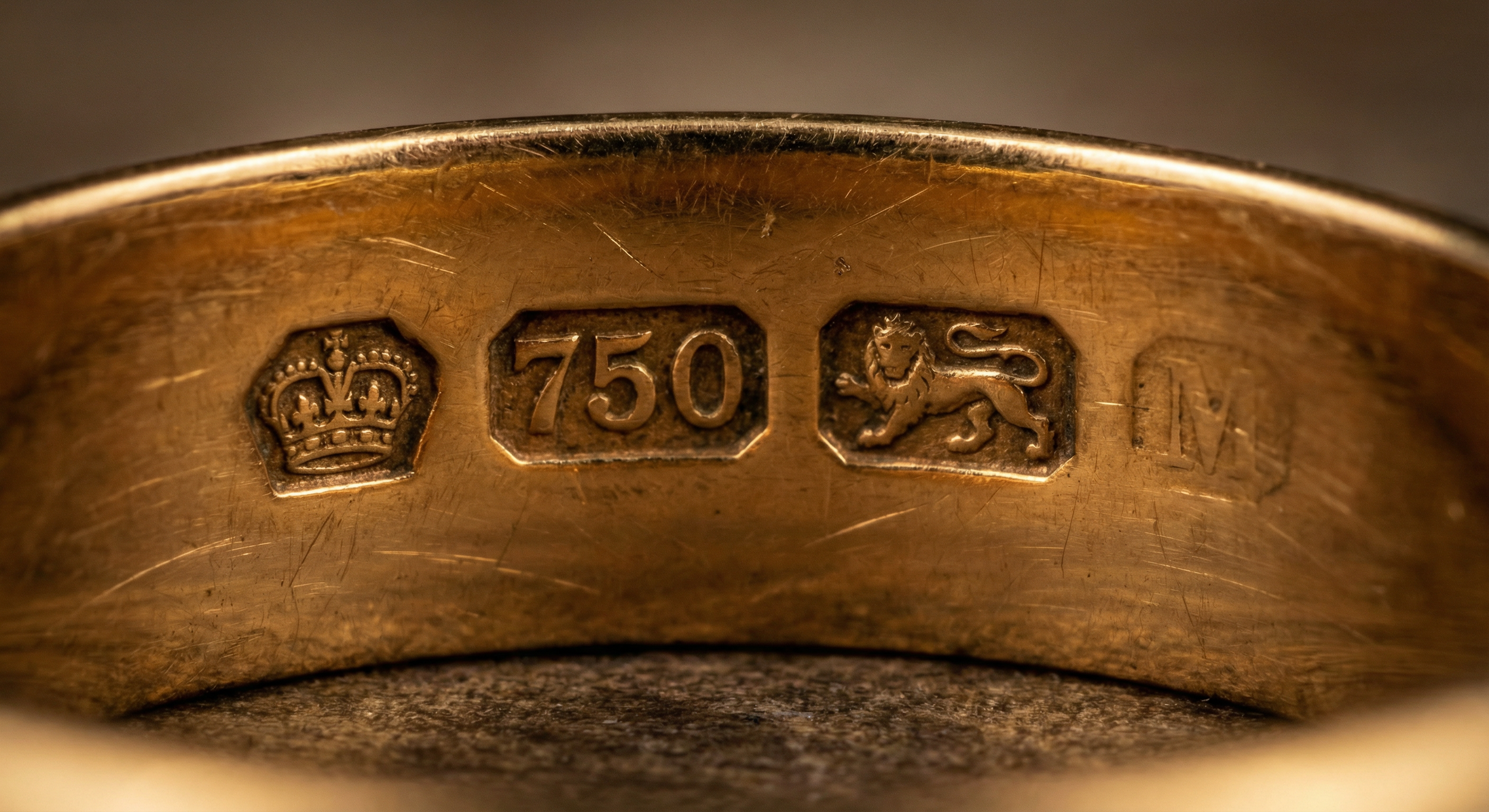
UK gold hallmarks — the fastest way to establish authenticity and purity
Factor 1: Hallmarks & Metal Purity
Hallmarks are the first and fastest indicator of value. In the UK, silver hallmarks and gold hallmarks have been legally required since medieval times, providing instant authentication and purity information.
Gold Purity Standards
| Karat | Purity (%) | UK Hallmark | Typical Value Premium |
|---|---|---|---|
| 24ct Gold | 99.9% pure | 999 or "24" | Rare in jewellery; full melt value |
| 22ct Gold | 91.7% pure | Crown, 916 | Common in Asian/Indian pieces |
| 18ct Gold | 75% pure | Crown, 750 | Standard for fine jewellery; 20-40% above melt |
| 9ct Gold | 37.5% pure | Crown, 375 | UK standard; 10-25% above melt if antique |
For current gold price calculations, use our gold price calculator to understand baseline scrap value. Designer or period pieces command premiums well above this baseline.
Silver Standards
Sterling silver (92.5% pure, marked with a lion passant) and Britannia silver (95.8%, marked with seated Britannia figure) are the two main UK standards. Fully hallmarked Georgian and Victorian silver pieces often sell for 2-5x their melt value due to craftsmanship and age.
Factor 2: Gemstone Quality
Gemstones can represent 50-90% of a piece's total value, particularly in rings and necklaces. The "Four Cs" — Carat, Cut, Colour, and Clarity — apply primarily to diamonds, but similar principles govern all precious stones.
What Increases Gemstone Value
- Natural vs synthetic: Natural stones are significantly more valuable. Synthetics created in labs (common post-1960) have minimal resale value.
- Treatment status: Untreated rubies, sapphires, and emeralds command premiums of 50-200% over heat-treated or oil-filled stones.
- Origin: Burmese rubies, Kashmir sapphires, and Colombian emeralds are the most valuable due to rarity and colour quality.
- Old cuts: Rose cuts, old mine cuts, and old European cuts (pre-1920) are sought after by collectors despite lower brilliance than modern cuts.
- Carat weight thresholds: Diamonds over 1ct, rubies over 2ct, and sapphires/emeralds over 3ct jump significantly in per-carat value.
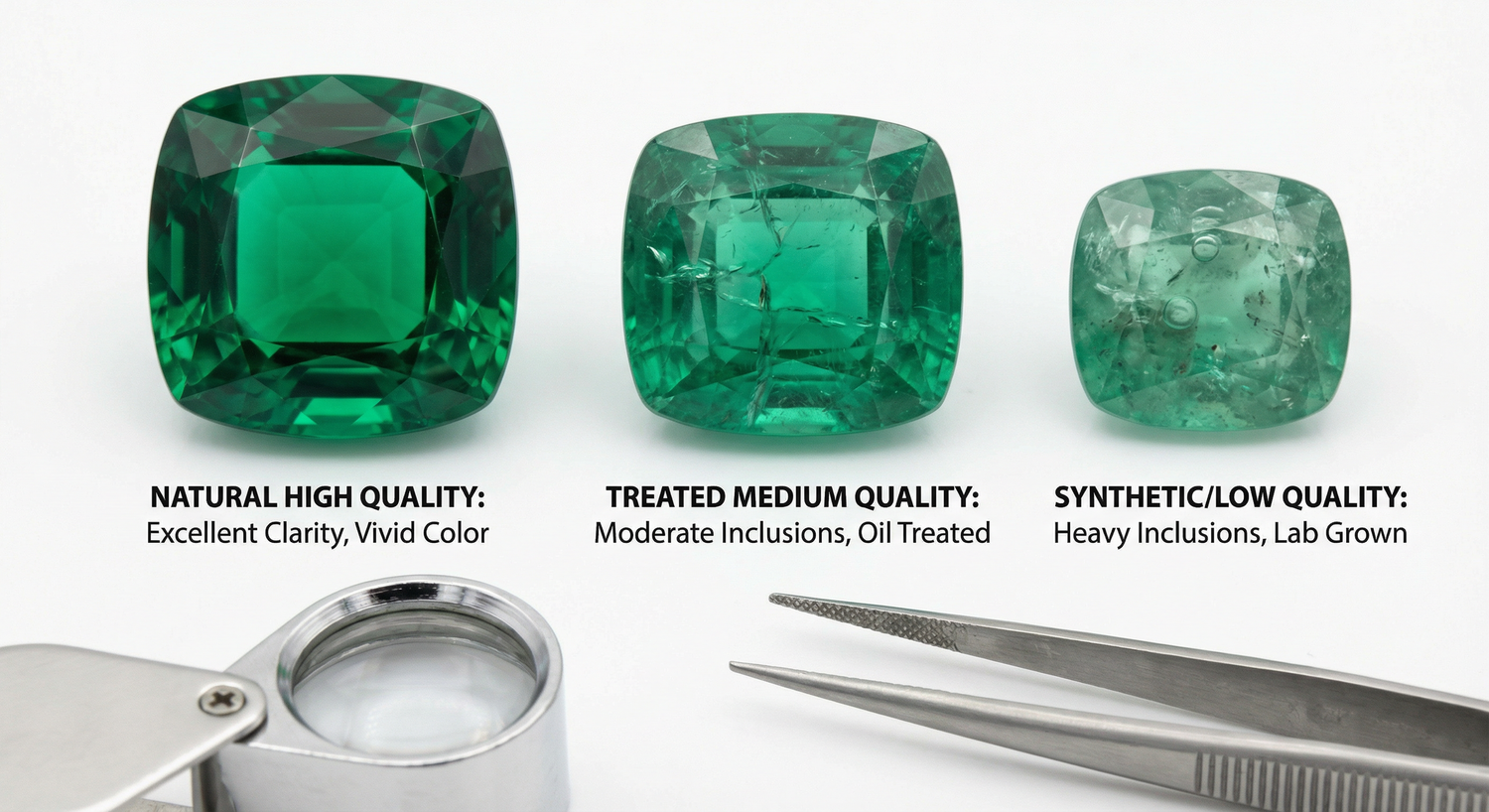
Gemstone quality comparison — natural vs treated, and key grading factors
If you own pieces with significant gemstones, especially from Victorian or Art Deco eras, professional gemological assessment is essential before selling.
Factor 3: Era & Age
The period in which a piece was made dramatically affects its value. Certain eras are in high collector demand, while others languish.
| Era | Date Range | Characteristics | Collector Demand |
|---|---|---|---|
| Georgian | 1714-1837 | Foil-backed stones, closed settings, cannetille work, memorial jewellery | ⭐⭐⭐⭐⭐ Highest premiums; extreme rarity |
| Victorian | 1837-1901 | Romanticism, mourning jewellery, cameos, seed pearls, sentiment pieces | ⭐⭐⭐⭐⭐ Very high demand |
| Edwardian | 1901-1915 | Platinum, millegrain, delicate lace-like designs, natural pearls | ⭐⭐⭐⭐ Strong demand for platinum pieces |
| Art Deco | 1920-1939 | Geometric designs, bold colours, calibré-cut gemstones, Egyptian motifs | ⭐⭐⭐⭐⭐ Peak collector interest |
| Retro | 1940s-1950s | Bold gold, oversized cocktail rings, tank designs, rubies | ⭐⭐⭐ Growing interest |
| Vintage | 1960s-1980s | Variable styles, often designer-driven (Cartier Love, VCA Alhambra) | ⭐⭐⭐ Designer pieces only |
Pieces from the Georgian and Art Deco eras consistently achieve the highest premiums at auction and through specialist dealers. Mid-century (1950s-1980s) pieces without designer provenance typically sell closer to melt value unless exceptionally well-crafted.
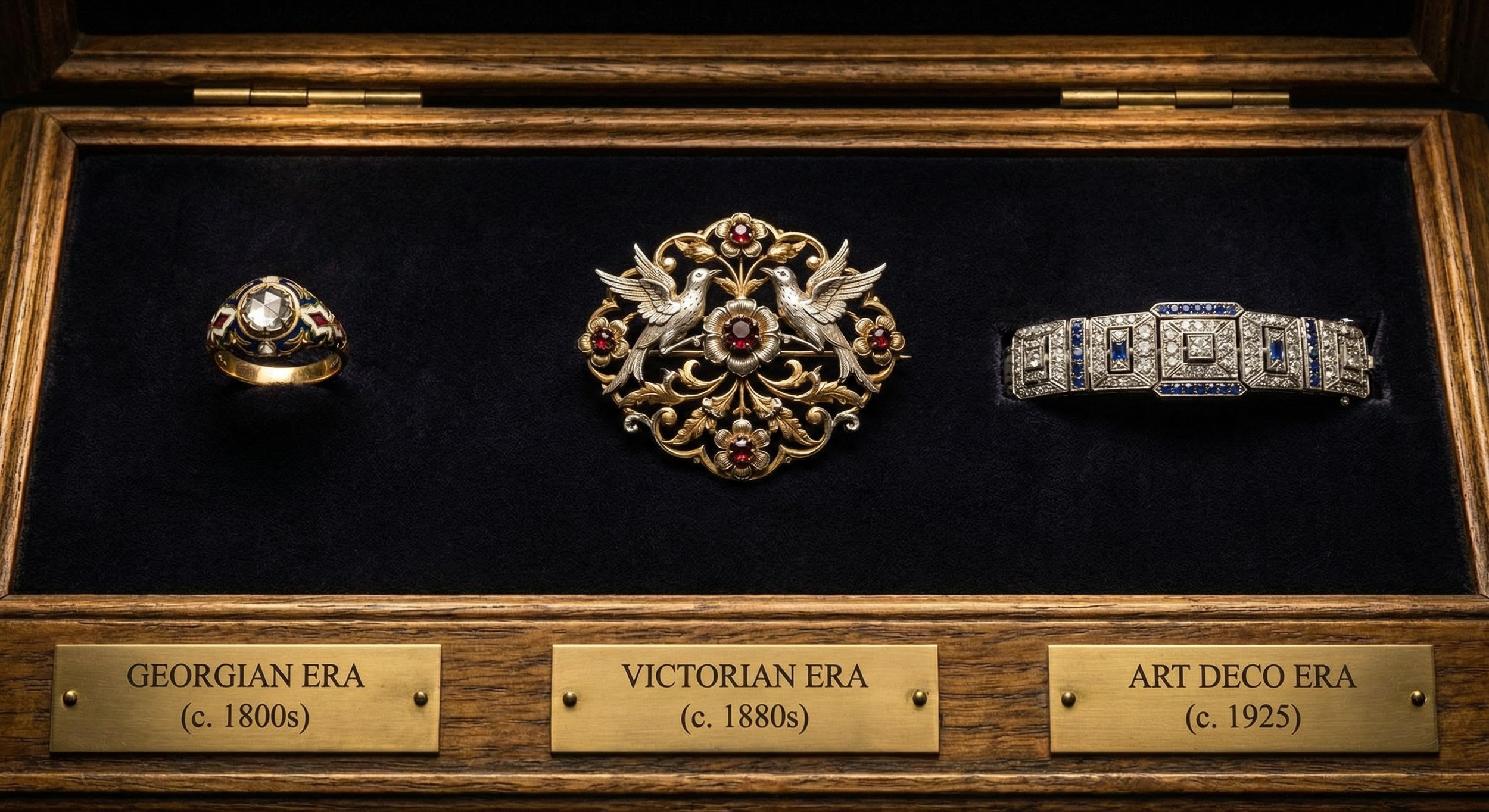
Jewellery eras timeline — from Georgian (1714) to Vintage (1980s)
Factor 4: Brand & Maker
Designer and maker attribution can add thousands — or tens of thousands — to a piece's value. The most sought-after names include:
Tier 1: Maison Houses (Highest Value)
- Cartier: Panthère, Love, Trinity, Tutti Frutti collections hold exceptional value
- Van Cleef & Arpels: Alhambra, Mystery Set pieces, vintage clips
- Boucheron: Serpent Bohème, Question Mark necklaces, Art Deco pieces
- Bulgari: Serpenti, Parentesi, Monete collections
- Tiffany & Co: Jean Schlumberger designs, vintage signed pieces
If you own designer jewellery from these houses, expect to retain 40-70% of original retail value, depending on condition and current market demand.
Tier 2: British Heritage Makers
- Garrard, Asprey, Wartski (royal jewellers)
- Kutchinsky (1950s-1990s London jeweller)
- Andrew Grima, John Donald (modernist designers)
Tier 3: Unsigned Antique Pieces
Even without maker's marks, high-quality Georgian and Victorian pieces hold strong value based on craftsmanship, materials, and era alone. Provenance research through hallmarks can sometimes reveal prestigious makers.
Factor 5: Condition
Condition directly impacts value. Original, unaltered pieces command premiums, while heavily repaired or modified jewellery may sell close to scrap value regardless of age.
What Professional Valuers Examine
- Stone security: Are all stones present and secure, or are settings loose/empty?
- Metal wear: Is the piece worn thin from decades of use, or does it retain crisp detail?
- Repairs and alterations: Has the shank been replaced? Have stones been reset? Has sizing damaged hallmarks?
- Enamel integrity: Enamel work (common on Victorian and Art Nouveau pieces) chips easily and is expensive to restore.
- Clasp functionality: On necklaces and bracelets, original working clasps add value; replacements detract.
Important: Do not attempt to clean, polish, or "restore" antique jewellery before valuation. Over-cleaning can remove patina, damage enamel, or wear down hallmarks — all of which reduce value. Present pieces as-found for accurate assessment.
Factor 6: Weight & Size
For gold and silver jewellery, weight determines baseline scrap value. A professional valuation starts with weighing the piece on a precision scale (accurate to 0.1 grams) and calculating metal content.
Example Calculation: 18ct Gold Ring
- Total weight: 5.2 grams
- 18ct purity: 75% gold content = 3.9g pure gold
- Current gold price: £58/gram (example)
- Scrap value: 3.9g × £58 = £226
- Actual market value: £300-500 if Victorian with original stones; £1,500+ if signed Cartier or Van Cleef
Use our gold calculator to estimate baseline scrap value, then add premiums for age, maker, and condition.
Factor 7: Provenance & Documentation
Provenance — the documented history of a piece — can significantly increase value, especially for high-end jewellery.
What Counts as Provenance
- Original boxes: Cartier, Van Cleef, or other luxury house boxes with matching serial numbers
- Receipts or certificates: Original purchase documentation, GIA/IGI gemstone certificates
- Auction records: Prior sale through Christie's, Sotheby's, or Bonhams
- Family history: Letters, photographs, or wills documenting ownership
- Notable prior owners: Jewellery from estates of titled families or celebrities
Designer pieces with original boxes and papers can command 20-40% premiums over identical pieces sold without documentation.
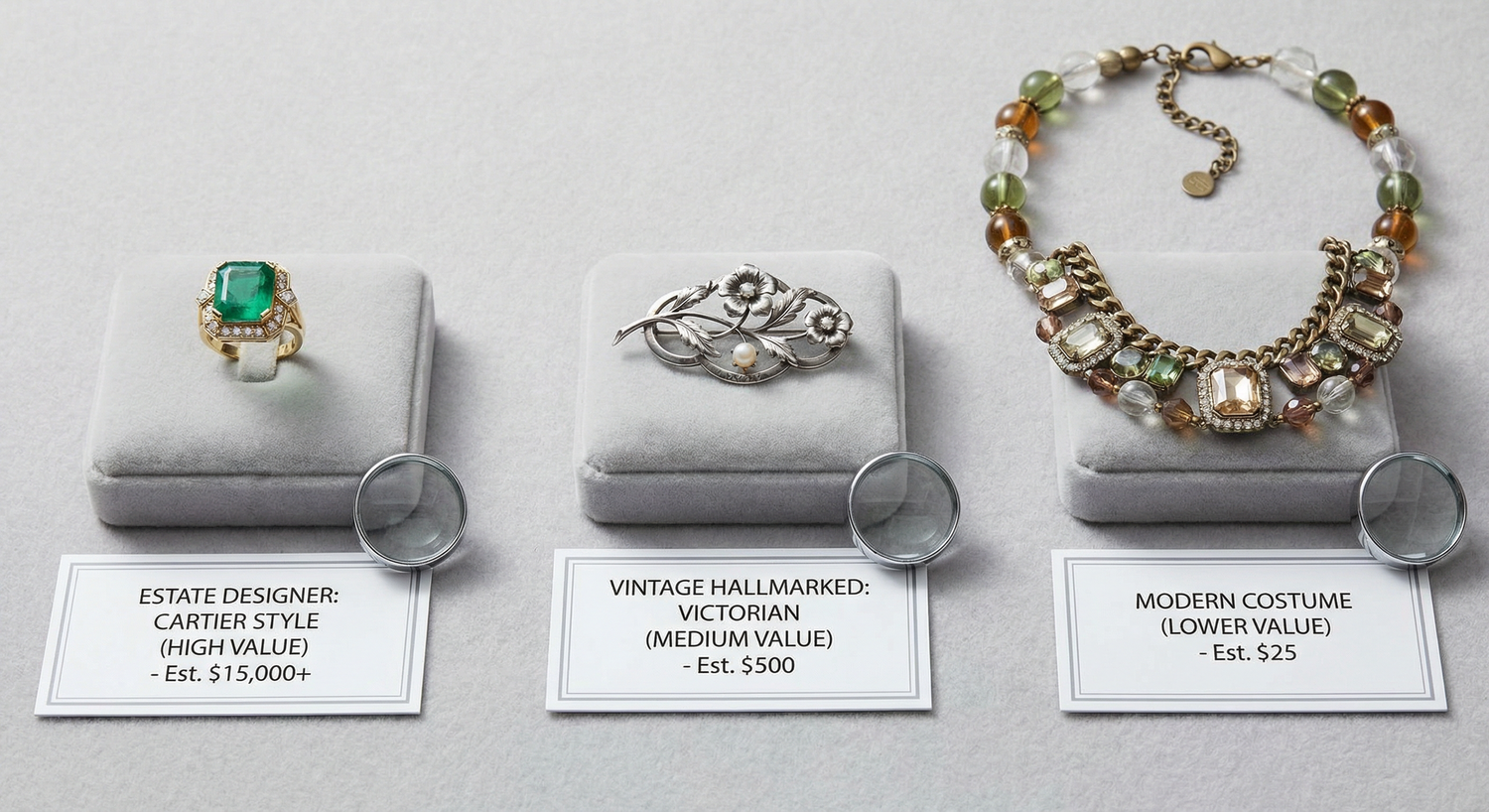
Understanding jewellery value tiers: designer, vintage, and costume pieces
How Professionals Value Jewellery
Professional jewellers and dealers use a multi-step valuation process:
- Visual inspection: Examine hallmarks, maker's marks, and overall construction under magnification
- Gemstone assessment: Loupe examination for natural vs synthetic, treatment detection, quality grading
- Weighing: Precision scales determine exact metal weight
- Purity testing: XRF (X-ray fluorescence) for non-destructive metal analysis, or acid testing for unmarked pieces
- Market research: Cross-reference comparable sales at auction houses, specialist dealers, and online platforms
- Era and maker attribution: Identify period and maker through hallmarks, construction techniques, and stylistic analysis
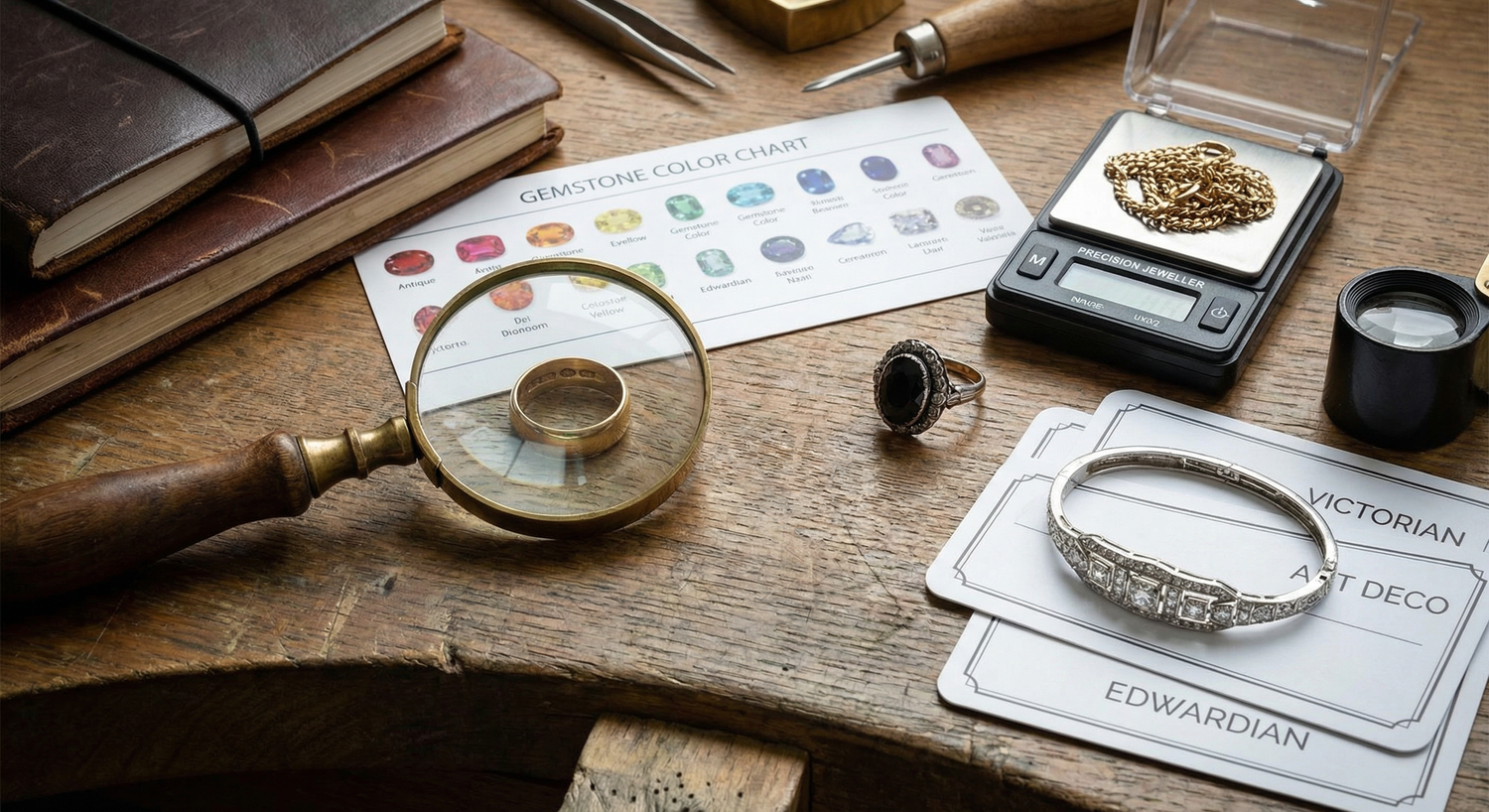
The 7 key factors professional valuers examine when assessing antique jewellery
At Mozeris Fine Antiques, we provide free valuations using this exact process. Our specialists have over 50 years combined experience in Georgian, Victorian, Edwardian, and Art Deco jewellery authentication.
When to Get a Professional Valuation
Consider professional valuation if your jewellery has any of the following characteristics:
- UK hallmarks (any assay office mark: lion, anchor, leopard's head, castle)
- Designer signatures or maker's marks (especially Cartier, Van Cleef, Tiffany)
- Large gemstones (diamonds over 0.5ct, coloured stones over 1ct)
- Obvious age indicators (Georgian closed settings, Victorian sentiment motifs, Art Deco geometric designs)
- Natural pearls (pre-1920s pieces may contain valuable natural pearls worth more than the entire piece)
- Heavy gold content (pieces that feel substantial when held)
- Original boxes, papers, or documented history
Tip: Even if a piece appears damaged or "old-fashioned," it may have significant value. Victorian mourning jewellery, Georgian memorial rings, and Edwardian platinum pieces are all highly collectible regardless of current fashion trends.
Get Your Jewellery Valued by Experts
Free, no-obligation valuations on all antique and designer jewellery. We buy gold, silver, diamonds, and estate pieces at competitive prices. Same-day payment, free insured collection.
Get Free Valuation WhatsApp UsFrequently Asked Questions
Explore Our Curated Collection
Browse authenticated antique and vintage jewellery from Georgian, Victorian, Edwardian, and Art Deco eras. Each piece is hallmarked, documented, and ready to wear or gift.
View Jewellery Collection
